


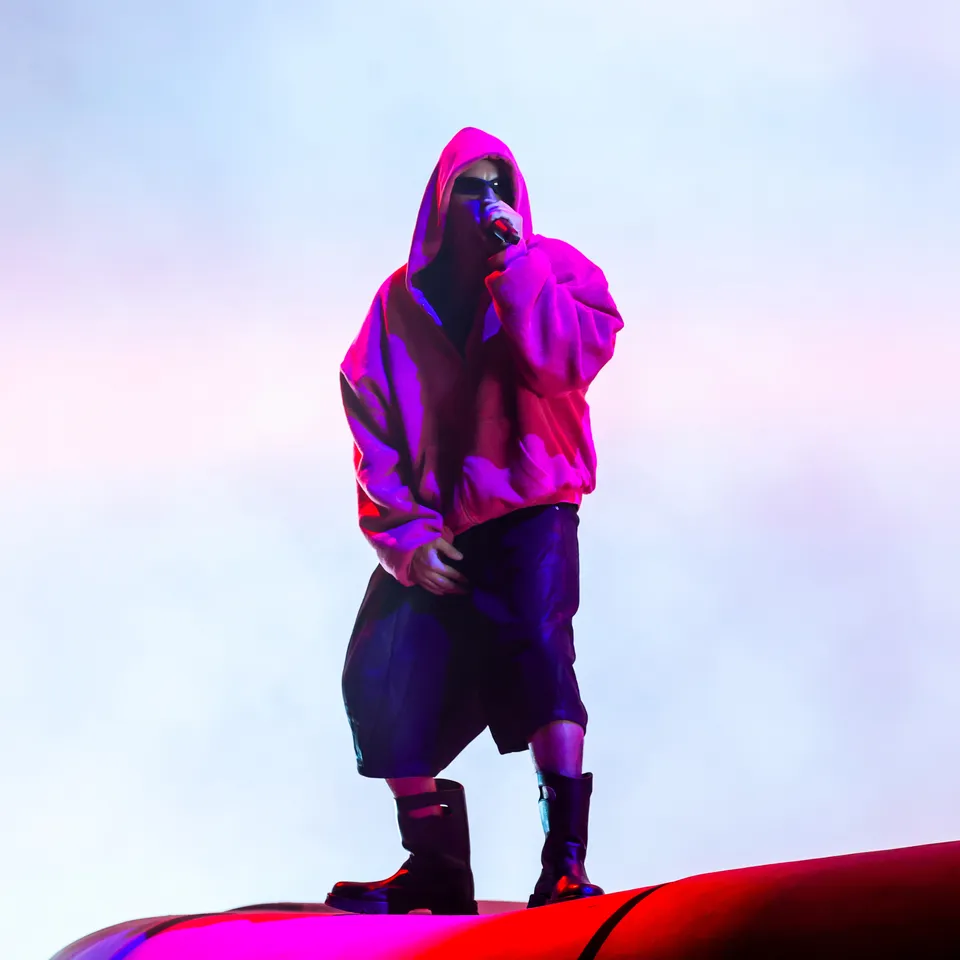
Justin Bieber didn’t return to Coachella quietly.
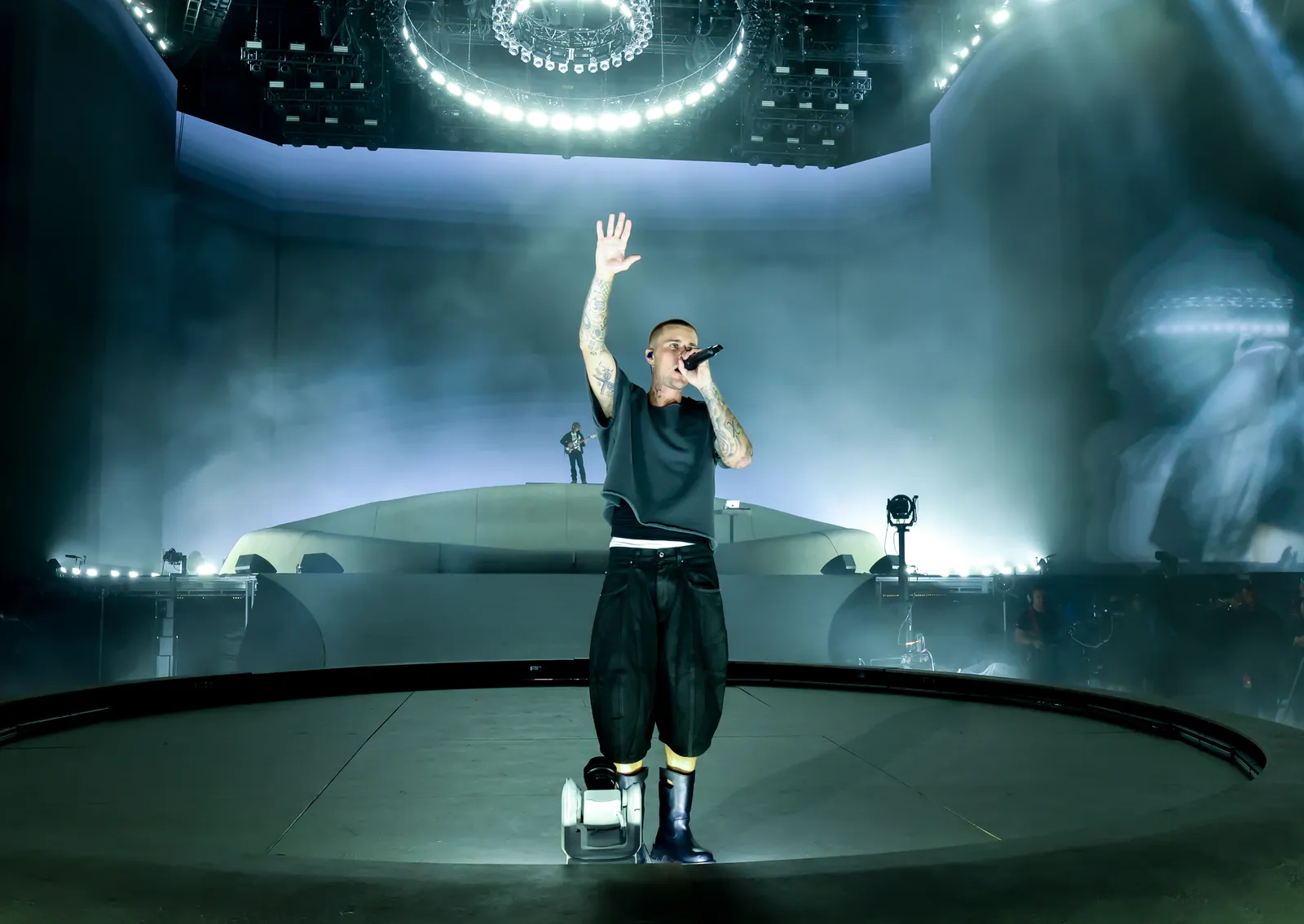
After years away from the stage, Justin Bieber Coachella 2026 was framed as a comeback moment. What unfolded instead was something far less predictable — a performance that resisted spectacle and leaned into something more personal, almost unfinished by design.
The set opened in stillness.
No elaborate visuals. No choreography. No traditional “headline moment.”
Instead, Bieber leaned into his Swag era — slower, mood-driven, and deliberately restrained. It felt less like a performance and more like a controlled release of presence.
For a festival built on scale, he chose intimacy.
Then came the shift.
Mid-performance, Bieber sat behind a desk, opened a laptop, and began navigating YouTube in real time. Old clips, early covers, viral internet moments — even fragments of his own past — played out across the stage.
For nearly 30 minutes, Justin Bieber Coachella 2026 became:
The crowd hesitated. The internet didn’t.
Within minutes, it became the most talked-about segment of the entire festival.
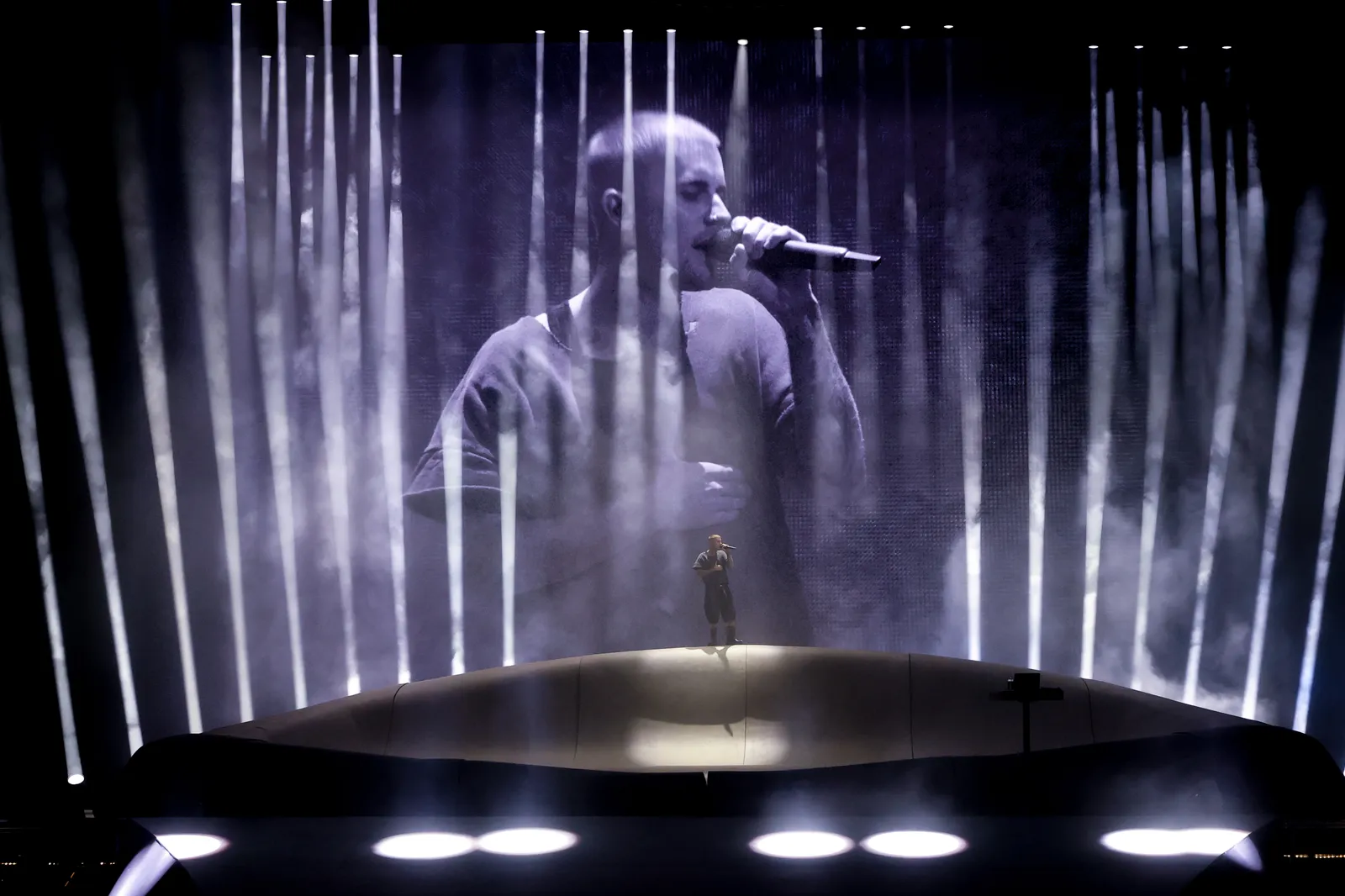
Beyond the performance, Bieber’s visual language carried just as much weight.
He stepped on stage in a full look anchored by his own label, SKYLrk — oversized hoodie, relaxed barrel shorts, and a muted, almost guarded silhouette that mirrored the tone of the set. The styling leaned into a “comfort-first” aesthetic, sitting somewhere between streetwear and introspection.
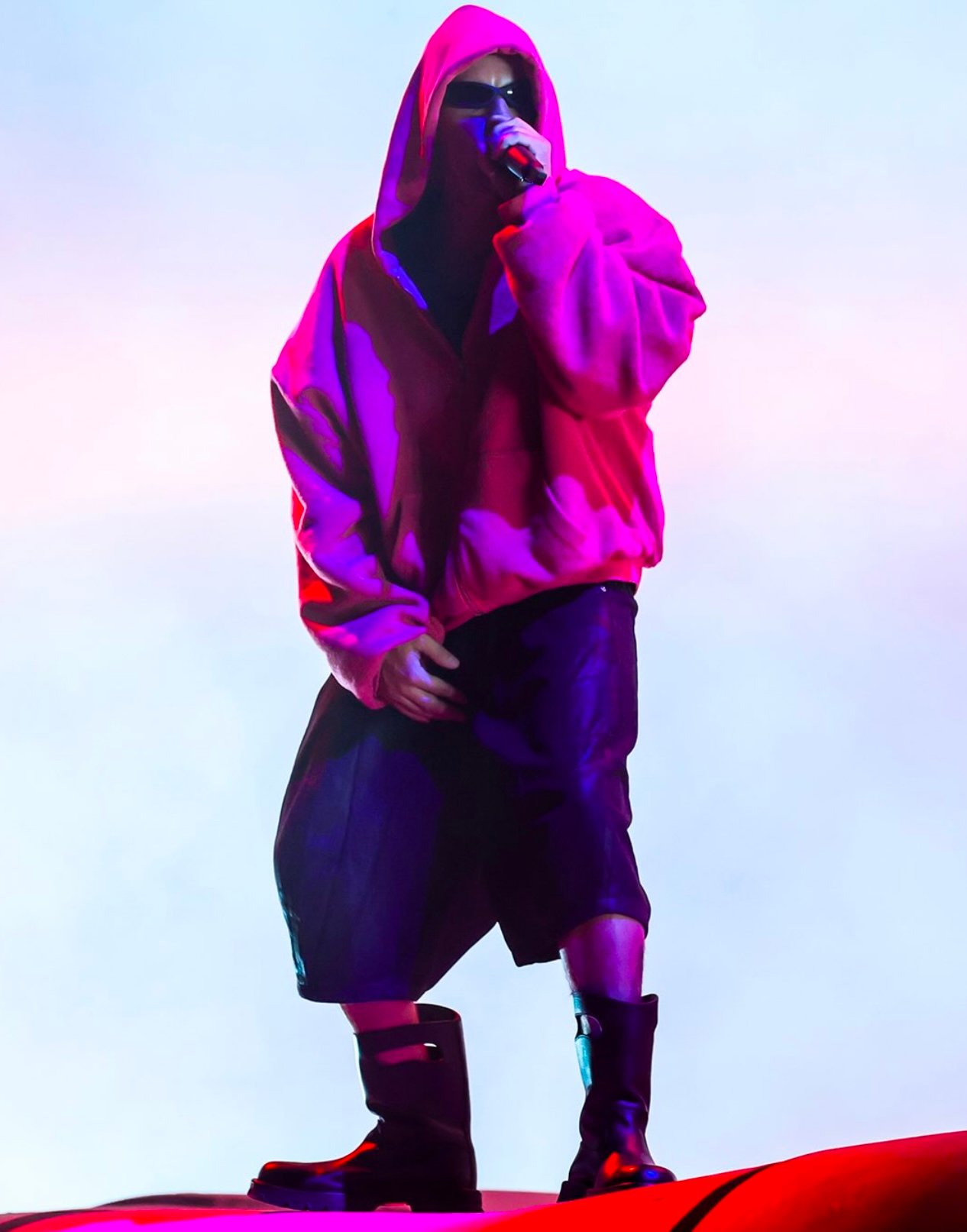
Footwear came from Loewe, while accessories included signature tinted shades and a hood pulled low, keeping his presence intentionally subdued.
Then came the detail that caught immediate attention:
His custom grills.
Designed by Gabby Elan, the pear-shaped pink sapphire grills added a sharp, almost surreal contrast to the understated outfit — a flash of luxury inside an otherwise restrained visual narrative.
Alongside the performance, Bieber also introduced SKYLrk merch and activation pieces, extending the show beyond music into a full lifestyle imprint — a move that aligns with how modern artists are building worlds, not just moments.
While the structure leaned experimental, the guests brought clarity.
The Kid LAROI joined for “Stay,” restoring a familiar energy.
Tems delivered one of the most sonically grounded moments of the night, before linking with Wizkid for “Essence” — a moment that briefly unified the crowd.
These appearances acted as anchors in a set that otherwise resisted structure.
Beyond the stage, the numbers added another layer.
Reports suggest Bieber earned close to $10 million for his Coachella 2026 headline slot — significantly above the typical $3M–$4M range for headliners. If accurate, it positions him among the highest-paid performers in the festival’s history.
That figure reframes the performance entirely.
Because when expectation meets experimentation at that scale, reaction becomes inevitable.
Justin Bieber Coachella 2026 didn’t land cleanly.
Some called it underwhelming. Others labelled it messy. A portion of the crowd reportedly disengaged during the quieter stretches.
But there’s another reading — one that sees the performance as intentional disruption.
Supporters described it as raw, vulnerable, and self-aware. Not a failure of production, but a rejection of it.
Coachella thrives on spectacle.
But this year, its most defining moment came from restraint.
Justin Bieber Coachella 2026 wasn’t built to impress everyone. It was built to say something — about control, identity, and what it means to return without pretending nothing changed.
And whether understood or not, that tension is exactly what made it unforgettable.


